
Best Electric Toothbrushing Technique for Beginners 2026
Discover the best electric toothbrushing technique and improve your oral hygiene.
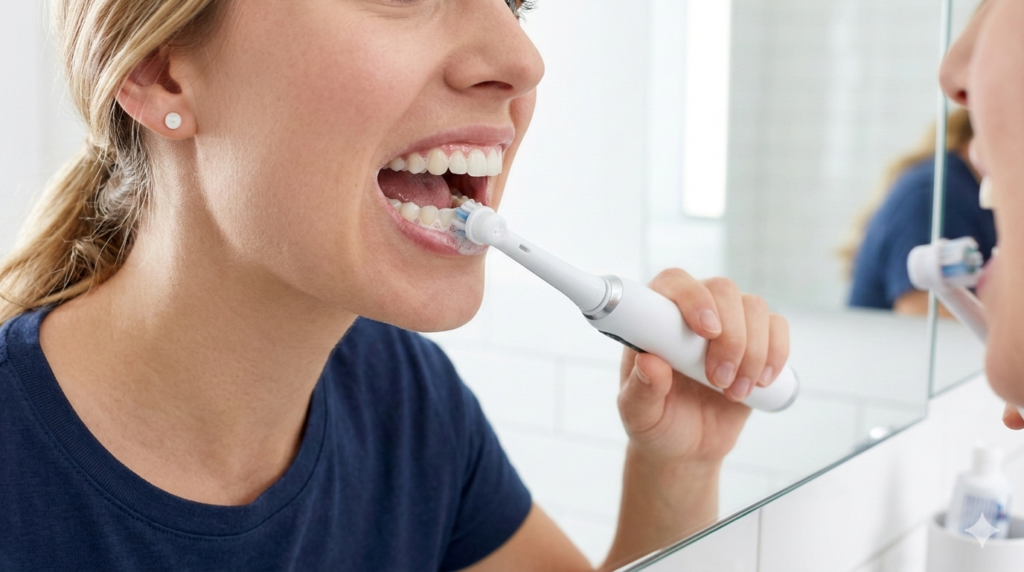
Best Electric Toothbrushing Technique: How to Use an Electric Toothbrush for Healthier Teeth
Electric toothbrushes have become increasingly popular because they help remove plaque more efficiently than manual brushing. However, many people still wonder about the best electric toothbrushing technique and whether they are using their toothbrush correctly. Simply owning an electric toothbrush does not guarantee better oral hygiene—proper brushing technique plays a major role in maintaining healthy teeth and gums.
This guide explains how electric toothbrushes work, the correct brushing method, and tips to improve your daily dental care routine.
Why Electric Toothbrushes Are Effective
Electric toothbrushes are designed to produce rapid bristle movement that helps remove plaque and food particles from teeth and gum lines. These devices use either oscillating, rotating, or sonic technology to improve cleaning efficiency.
Advantages include:
Consistent brushing motion
Improved plaque removal
Built-in timers
Better access to hard-to-reach areas
Reduced effort compared with manual brushing
Because the brush head moves automatically, users only need to guide the toothbrush properly across each tooth surface.
Understanding the Best Electric Toothbrushing Technique
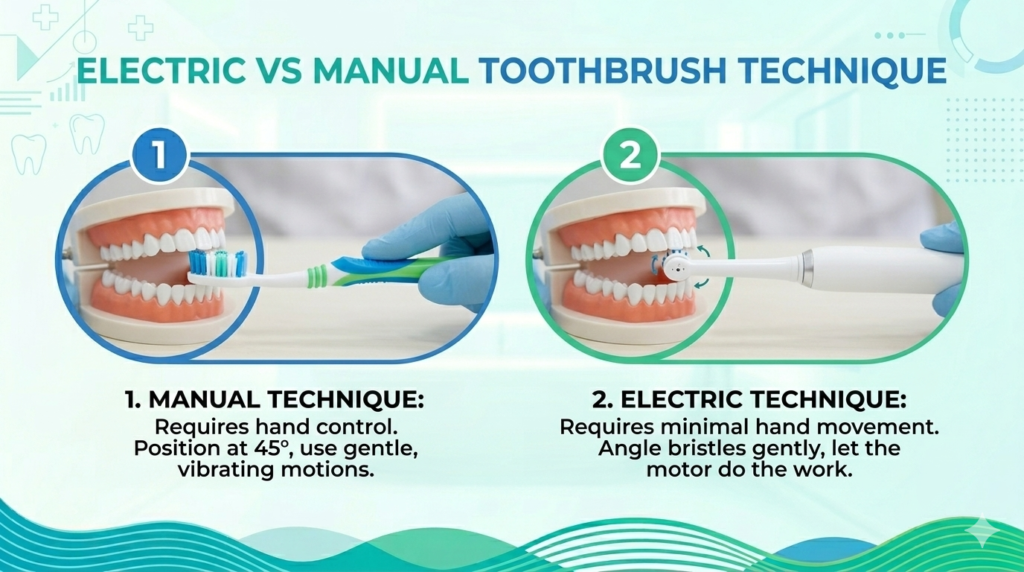
The best electric toothbrushing technique focuses on gentle guidance rather than scrubbing. Unlike manual brushing, electric toothbrushes do the movement themselves.
Follow these key steps:
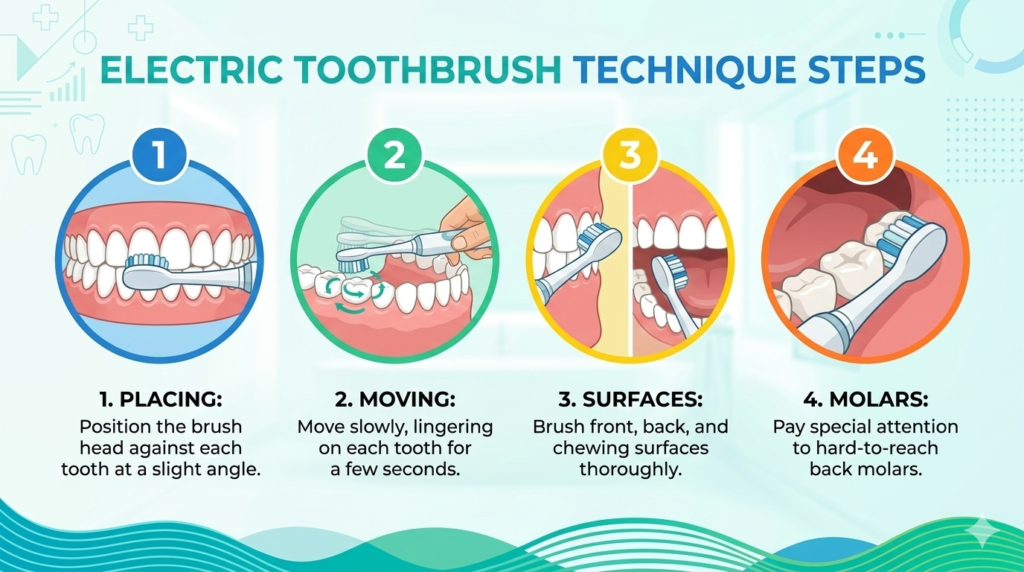
Hold the brush at a 45-degree angle toward the gum line.
Turn on the toothbrush before touching teeth to avoid splatter.
Gently guide the brush from tooth to tooth without aggressive scrubbing.
Pause briefly on each tooth surface to allow the bristles to clean effectively.
Move slowly along the gum line covering all teeth.
The goal is to allow the brush to do the work rather than applying excessive pressure.
The 2-Minute Brushing Rule
Most dental professionals recommend brushing for at least two minutes. Many electric toothbrushes include built-in timers to ensure proper brushing duration.
A typical brushing routine divides the mouth into four sections:
Upper right
Upper left
Lower right
Lower left
Spend about 30 seconds per quadrant for balanced cleaning.
Proper Pressure While Brushing
One common mistake is pressing too hard while brushing. Electric toothbrushes clean effectively with minimal pressure.
Too much pressure may cause:
Gum irritation
Enamel wear
Tooth sensitivity
Use a light grip and allow the brush head to glide across the teeth.
Cleaning the Front and Back Surfaces
Each tooth has multiple surfaces that need cleaning.
Important brushing areas include:
Outer surfaces
Inner surfaces
Chewing surfaces
Gum line
Move the brush head slowly along each surface to ensure complete coverage.
Brushing the Tongue
Bacteria accumulate on the tongue and contribute to bad breath. Many electric toothbrushes can gently clean the tongue using the back of the brush head or soft bristles.
Cleaning the tongue helps reduce:
Oral bacteria
Bad breath
Plaque buildup
Gentle strokes are sufficient.
Choosing the Right Electric Toothbrush Head
Brush heads vary in size, shape, and firmness. Selecting the correct head can improve cleaning efficiency.
Common options include:
Soft bristles
Compact brush heads
Sensitive gum heads
Plaque-control heads
Dentists generally recommend soft bristles to protect gums.
Brushing Angle and Gum Health
Maintaining a proper brushing angle helps clean the gum line where plaque often accumulates. The 45-degree angle allows bristles to reach between teeth and gum margins.
Correct angling supports:
Plaque removal
Gum health
Reduced inflammation
Improved cleaning efficiency
Consistency is key to maintaining healthy gums.
Common Electric Toothbrush Mistakes
Many users unknowingly brush incorrectly even with electric brushes.
Common mistakes include:
Scrubbing aggressively
Brushing too quickly
Skipping inner teeth surfaces
Not brushing long enough
Using worn brush heads
Correct technique improves overall effectiveness.
Replacing the Brush Head
Electric toothbrush heads gradually wear down. Worn bristles reduce cleaning performance.
Dentists typically recommend replacing brush heads every:
3 months
Or sooner if bristles fray
Regular replacement maintains optimal brushing efficiency.
Electric Toothbrush vs Manual Brushing
Both electric and manual brushing can maintain oral health when used correctly. However, electric toothbrushes often help people maintain better technique.
Electric toothbrush advantages include:
Consistent motion
Built-in timers
Pressure sensors
Improved plaque removal
These features make them easier for many users.
Daily Oral Hygiene Routine
To maximize dental health, brushing should be part of a complete oral hygiene routine.
Recommended practices include:
Brushing twice daily
Flossing daily
Using fluoride toothpaste
Regular dental checkups
A consistent routine supports long-term oral health.
Frequently Asked Questions
What is the best electric toothbrushing technique?
Gently guide the brush along teeth at a 45-degree angle without scrubbing.
How long should I brush with an electric toothbrush?
About two minutes.
Should I press hard while brushing?
No. Light pressure works best.
How often should I replace the brush head?
Every three months.
Are electric toothbrushes better than manual ones?
They can improve plaque removal and brushing consistency.
Advanced Tips for the Best Electric Toothbrushing Technique
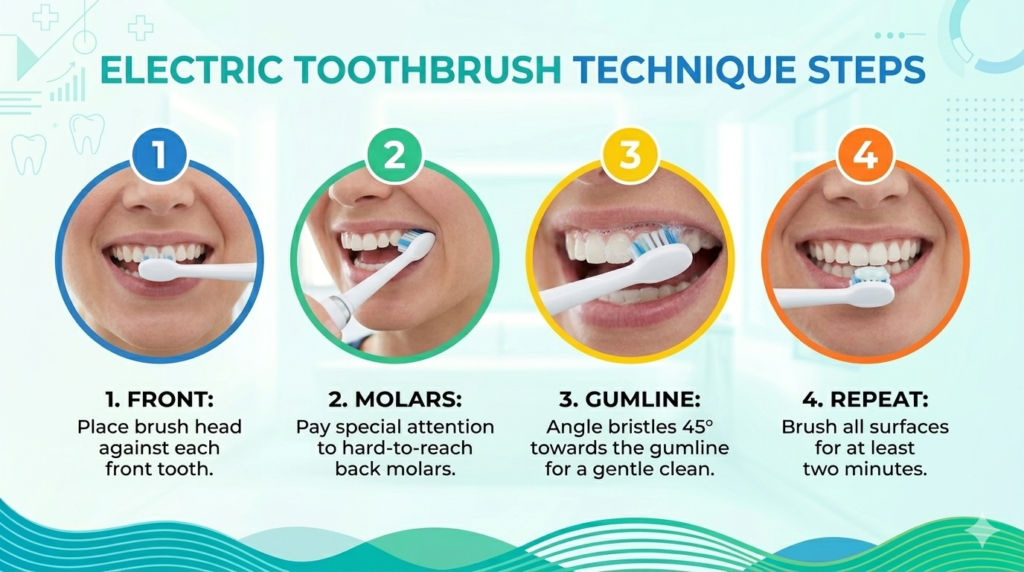
While basic brushing covers most plaque removal, refining the best electric toothbrushing technique can further improve oral hygiene. Many people use electric toothbrushes but still miss areas where plaque accumulates. Understanding how to guide the brush across different tooth surfaces ensures more complete cleaning.
Electric toothbrushes are designed to perform thousands of movements per minute. Because of this speed, the user only needs to guide the brush slowly and methodically across the teeth.
Focus on the Gum Line
The gum line is one of the most important areas to clean. Plaque tends to collect where the tooth meets the gums, and improper brushing in this area may lead to gum inflammation.
To clean the gum line effectively:
Angle the brush slightly toward the gums
Allow the bristles to reach the edge of the gum tissue
Move slowly from tooth to tooth
Maintaining gentle contact helps remove plaque without irritating the gums.
Cleaning Hard-to-Reach Back Teeth
Molars at the back of the mouth are commonly missed during brushing. These teeth have grooves and chewing surfaces that easily trap food particles.
For better cleaning:
Open your mouth slightly wider
Tilt the brush head vertically when needed
Spend extra time on chewing surfaces
Because molars handle most chewing activity, thorough brushing in this area is essential.
Brushing Inner Tooth Surfaces
Many people focus only on the visible outer surfaces of their teeth. However, plaque can build up quickly on the inner surfaces facing the tongue.
To clean inner teeth:
Turn the brush slightly vertical
Guide the brush head along the inside of each tooth
Move slowly along the gum line
This area often requires slower, more careful brushing.
Allow the Brush to Do the Work
One of the biggest differences between manual brushing and electric brushing is motion. Manual brushes require scrubbing movements, while electric brushes generate their own motion.
For the best electric toothbrushing technique, avoid:
Aggressive back-and-forth scrubbing
Excess pressure
Rapid sweeping across teeth
Instead, hold the brush gently and allow the bristles to rotate or vibrate while you guide the brush head.
Use Section-by-Section Brushing
Dividing the mouth into sections helps ensure equal cleaning. Many dentists recommend a quadrant method when brushing with electric toothbrushes.
The four sections include:
Upper right teeth
Upper left teeth
Lower right teeth
Lower left teeth
Spend about 30 seconds cleaning each area to complete the recommended two-minute brushing session.
Maintain Consistent Brushing Speed
Electric toothbrushes work best when moved slowly. Moving too quickly across teeth reduces cleaning efficiency.
A helpful tip is to pause briefly on each tooth for a moment before moving to the next. This allows the brush head enough time to remove plaque effectively.
Replace Brush Heads Regularly
Over time, toothbrush bristles become worn and lose their cleaning ability. Using an old brush head may reduce plaque removal and increase gum irritation.
Most dental professionals recommend replacing electric toothbrush heads every:
3 months
Or when bristles appear frayed
Some brush heads also include color indicators that fade when replacement is needed.
Combine Brushing With Flossing
Even the best electric toothbrushing technique cannot reach the tight spaces between teeth. Dental floss removes plaque and food particles in these areas.
A complete oral care routine should include:
Brushing twice daily
Flossing once per day
Regular dental checkups
Flossing complements brushing by cleaning areas the brush cannot reach.
Choosing the Right Toothpaste
The type of toothpaste used with an electric toothbrush also matters. Fluoride toothpaste strengthens enamel and helps prevent cavities.
Specialized options include:
Sensitive teeth toothpaste
Whitening toothpaste
Gum-care formulas
Selecting a toothpaste suited to your dental needs can enhance brushing results.
Electric Toothbrush Pressure Sensors
Many modern electric toothbrushes include pressure sensors that warn users when they brush too hard. This feature protects gums and enamel from damage.
Benefits of pressure sensors:
Prevent excessive force
Reduce gum recession risk
Improve brushing technique
Light pressure is always more effective and safer.
Developing a Consistent Oral Care Habit
The most important factor in dental health is consistency. Even the most advanced toothbrush will not provide results if brushing habits are irregular.
A healthy routine includes:
Brushing every morning and night
Cleaning the tongue
Flossing daily
Visiting the dentist regularly
Consistency helps maintain long-term oral hygiene.
Extended Conclusion
Mastering the best electric toothbrushing technique involves more than simply turning on the brush. Proper angle, gentle pressure, slow movement, and equal attention to all tooth surfaces are essential for effective plaque removal. By focusing on the gum line, cleaning back teeth carefully, and maintaining a full two-minute brushing routine, electric toothbrush users can significantly improve their oral hygiene.
Combined with flossing, fluoride toothpaste, and regular dental visits, proper electric brushing technique supports healthier gums, cleaner teeth, and better long-term dental health.